
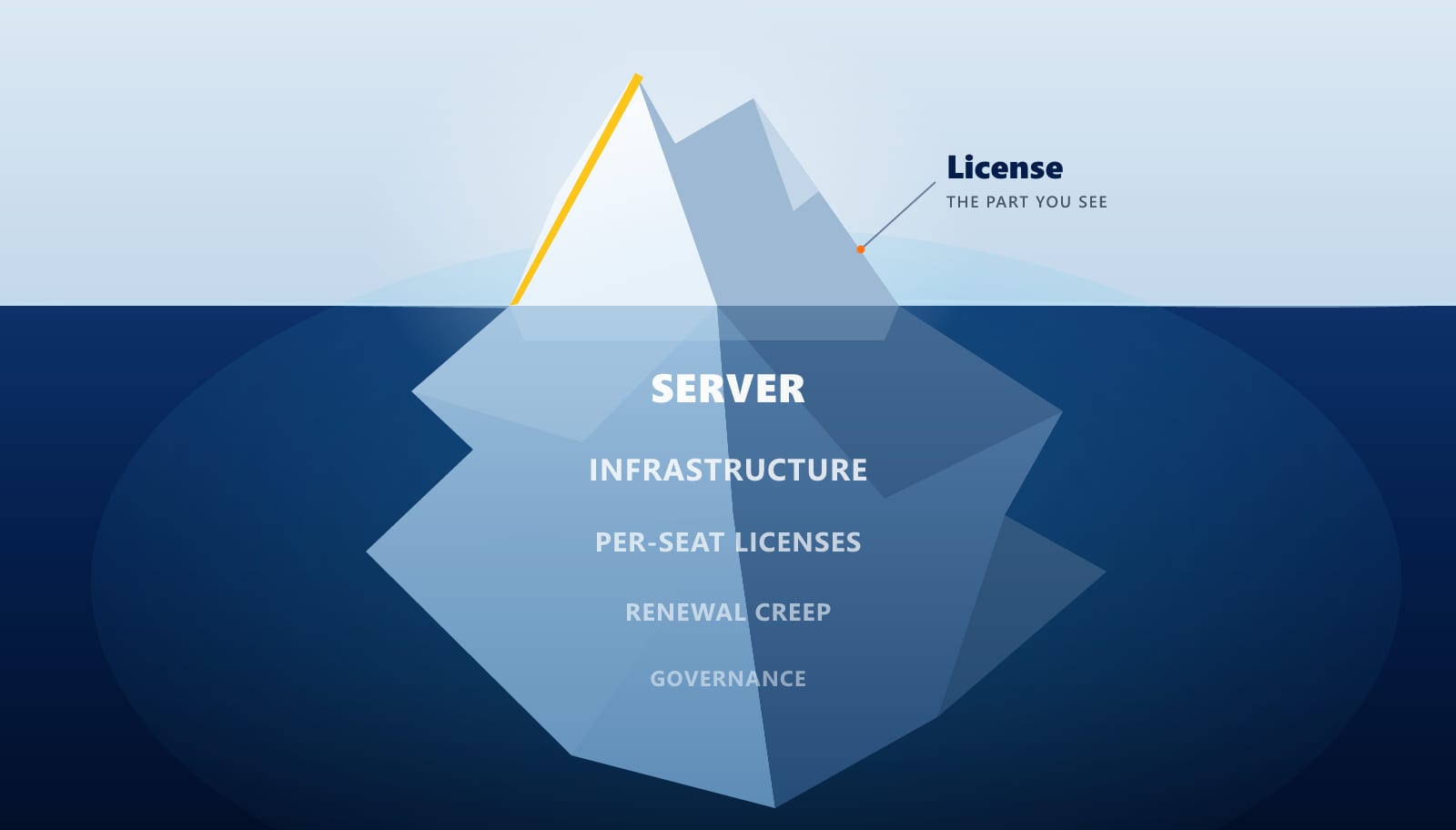
Ask what Alteryx costs and you will usually get one number: the Designer license. That is the part you can see, and it is the smallest part of the bill.
The real cost of Alteryx is a total-cost-of-ownership question, and it is where finance teams get surprised. Before your next renewal, it is worth seeing the whole number.
Where the cost of Alteryx actually comes from
The Designer sticker price is one line. The total is built from several:
- Per-seat Designer licenses. Every person who builds a workflow needs a paid seat, and the count only grows as more of the team wants in.
- A separate Server license. Scheduling, sharing, and running workflows without a desktop open generally means Alteryx Server, which is licensed on top of Designer.
- Infrastructure to run Server. The Server has to live somewhere, so add the compute, the VM or box, and the people who keep it patched and available.
- Renewal creep. Maintenance and renewal costs tend to rise year over year, so the number you signed is rarely the number you keep paying.
- The hidden line: governing a second system. A separate tool means separate access control, separate audit, separate upgrades, and separate support. That overhead is real, and it never appears on the license invoice.
Why per-seat pricing punishes success
Per-seat pricing has a built-in problem: the better a tool works, the more it costs. When a workflow proves its value, more analysts want to build, and more leaders want to see the output. On a per-seat model, every one of those people is another license.
The people who only need to read a result are the clearest example. A practice manager or a board member looking at a dashboard is pure value and, on a per-seat model, pure cost. Viewing a number should not require a license.
What “included” should actually mean
The fix is not a cheaper seat. It is a different model, where the things that quietly add up are simply included: compute, scheduling, governance, and unlimited people who only need to view.
That is how PlaidCloud is priced. Plans include a set number of builders plus unlimited viewers, and all compute is included, with no per-run or per-query charges. The published tiers run from a permanent Free plan to Starter at $800/mo and Team at $5,000/mo, with Business and Enterprise custom. Compare the plans. One platform fee covers the workflow engine, scheduling, the lakehouse, and the dashboards, so the cost does not climb every time another person needs access.
How to compare before your renewal
You do not need a spreadsheet war to see the gap. Add up four things on the Alteryx side:
- Every Designer seat, and every seat you would add if licensing were not the blocker.
- The Server license.
- The infrastructure and staff time to run it.
- Rising maintenance at renewal.
Then set that total next to a single platform fee with viewers and compute included. For most teams the totals are not close, and the gap widens every year the seat count grows.
The migration cost is smaller than you think
The one cost people overestimate is switching. Leaving Alteryx used to mean rebuilding everything, which is expensive and slow. It no longer does. PlaidCloud reads your actual Alteryx files, the .yxmd workflows, .yxwz apps, .yxmc macros, and .yxdb data, and imports them in one click as fully editable cloud workflows. You start from a running system, so switching cost is validation and rollout, not a rebuild. See the full picture on the Alteryx alternative page.
Put the two together, a lower total cost of ownership and a migration that is not a rebuild, and the math often lands in the same place: the platform pays for itself before your renewal date.
Book a 20-Minute Migration Assessment →
Frequently asked questions
How much does Alteryx cost? Alteryx does not publish simple flat pricing. The cost is built from per-seat Designer licenses, a separate Server license for scheduling and sharing, the infrastructure to run Server, and annual maintenance that tends to rise at renewal. The all-in total is usually well above the Designer sticker price, which is why a total-cost-of-ownership view matters. Check your own renewal quote for the real number.
What is the biggest hidden cost of Alteryx? Two stand out. First, per-seat pricing scales linearly, so cost climbs every time another person needs to build or even see a result. Second, running and governing a separate Server (plus its infrastructure) alongside the rest of your stack carries ongoing cost that never shows up on the Designer license line.
Is switching off Alteryx expensive? Less than most teams assume, because the slow, expensive part has always been the rebuild. PlaidCloud imports your .yxmd, .yxwz, .yxmc, and .yxdb files and converts them into editable cloud workflows in one click, so you start from a running system and switching cost drops to validation and rollout, not a rebuild.